
An article by Isaac Nana Kofi Asare and Mildred Letsa
From Margins to Mandates: Advancing Women’s Leadership in Ghana’s Governance Landscape
From an inherent patrilineal system, the tendency to overlook women have always existed in most developing countries of which Ghana is of no exception. However as generations passed and society evolve, the extreme neglect of women has become something of the past. The introduction of the sustainable development goals, particularly “SDG 5 – Gender Equality” has amplified the call for women’s inclusion in governance and decision-making structures. Research consistently demonstrates the value women bring to leadership, enhancing innovation, accountability, and inclusivity. In many developed worlds, governments have made deliberate stands in encouraging women to take part in governance matters. While progress in Africa has been uneven, countries such as South Africa, Kenya, Uganda, and Senegal have made significant strides in bridging the gender gap in public office and governance structures.
In Ghana, the Affirmative Action Act, 2024 (Act 1121)[1] was passed in July 2024 to enforce women’s representation in public officer, judiciary, and leadership positions. The overarching objective of this Act is to ensure that at least 50% women are represented in decision-making roles by 2034 through a progressive series of mandatory milestones below;
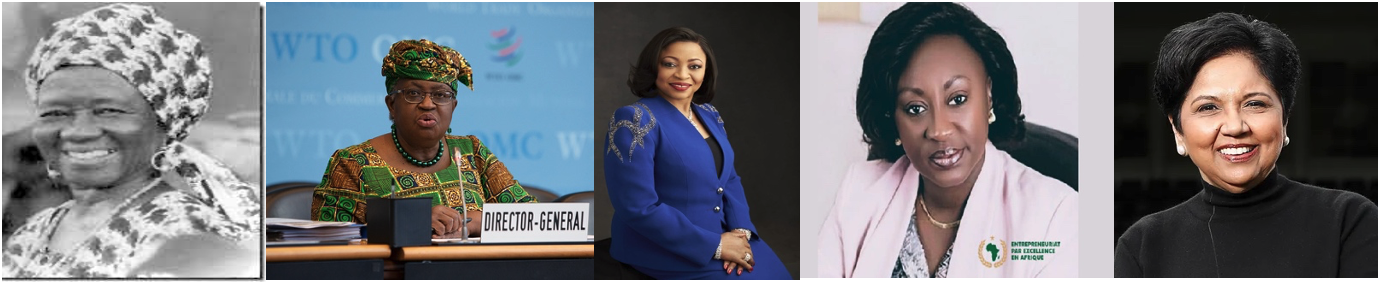
This Act signals a transformative shift from margins to mandates, embedding women’s leadership into the governance fabric of Ghana. It is not merely symbolic—it is a structural commitment to reshaping power dynamics and ensuring that women’s voices are integral to national decision-making. Across the globe and in Ghana, there are stories of great women who have influenced their sphere. In Ghana, women such as Patricia Poku-Diaby,[2] CEO of Plot Enterprise Group, have demonstrated extraordinary leadership in cocoa processing and exports, building one of the country’s most successful indigenous businesses. Esther Ocloo[3], co-founder of Women’s World Banking, pioneered microfinance and empowered countless women entrepreneurs across Africa. Others, like Grace Amey-Obeng [4], founder of Forever Clair Group, have built thriving enterprises in the beauty industry, creating jobs and inspiring women across the continent. These leaders prove that Ghanaian women are not only breaking barriers but also redefining success across industries.
Globally, figures such as Ngozi Okonjo-Iweala[5], Director-General of the World Trade Organization, and Indra Nooyi[6], former CEO of PepsiCo, stand as powerful examples of how women’s leadership can drive institutional reform, economic progress, and social equity. Their stories remind us that when women lead, societies and economies thrive.
Call to Action
As government has set the pace for including, it beckons a clarion call to corporate Ghana and the society at large to take up this initiative. To accelerate progress toward gender parity, every sector must act decisively:
Conclusion
The Affirmative Action Act is more than legislation—it is a clarion call to transform Ghana’s governance and corporate culture. Achieving gender parity is not just about fairness; it is about unlocking the full potential of society by ensuring that women’s perspectives shape the future. The journey from margins to mandates must be embraced not only by government but by every sector of Ghanaian society.
Happy Women’s Day
[2] Patricia Poku-Diaby. https://en.wikipedia.org/wiki/Patricia_Poku-Diaby
[3] Esther Afua Ocloo. https://en.wikipedia.org/wiki/Esther_Afua_Ocloo
[4] Grace Amey-Obeng. https://en.wikipedia.org/wiki/Grace_Amey-Obeng
[5] Ngozi Okonjo-Iweala. https://en.wikipedia.org/wiki/Ngozi_Okonjo-Iweala
[6] Indra Nooyi. https://en.wikipedia.org/wiki/Indra_Nooyi